

When Coloring Calms One Kid and Annoys Another.
A real-life reminder that sensory needs are individual, and the “best” activity is the one that actually fits your child. Revolutionary, apparently.
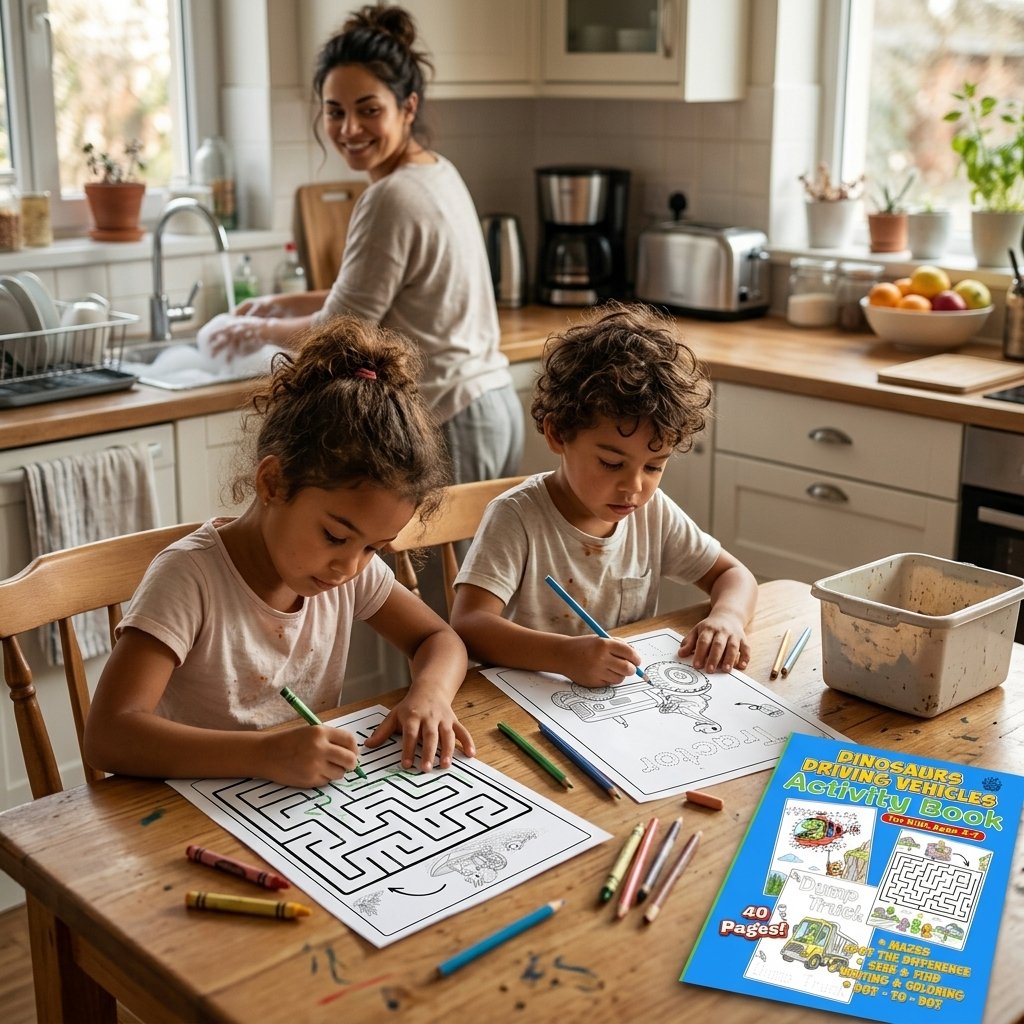
There is no trophy for forcing the “calm” activity until everyone is furious. No one is coming to your house with a medal that says, “Congratulations, you made quiet time weird.”
The takeaway
Coloring is calming for some kids.
For others, it’s boring. Scratchy. Too busy. Too hard. Too quiet. Too much sitting. Too much everything. Or somehow still not enough.
That doesn’t mean coloring failed. It means children are different. Shocking development. Alert the parenting books.
The best activity isn’t the one a product page promises will “promote calm and focus” while your child immediately throws the crayon under the couch. The best activity is the one that fits your actual child, in your actual house, on your actual Tuesday.
The real-life problem
Parenting advice loves to say, “Try coloring to calm your child.”
And sure. Sometimes that’s helpful.
But it’s also wildly incomplete.
Because sensory experience matters. Some kids love the pressure of crayons. Some hate the feel of pencils. Some love big open pages. Some get stressed out by tiny details. Some relax with repetitive motion. Some need movement, sound, deep pressure, or a snack before anything seated has even a remote chance of working.
A coloring page isn’t neutral.
It has texture. Sound. Smell. Visual clutter. Fine motor demands. Expectations. Tiny little hidden traps, basically.
For some kids, that combination is lovely.
For others? Hard pass.
Watch the child, not the idea
Instead of asking, “Does coloring calm kids?” ask, “What happens when my child colors?”
Look for clues.
Does your child settle into it?
Do they press hard and seem more grounded?
Do they get frustrated immediately?
Do they avoid certain tools like the pencil personally offended them?
Do they scribble happily but resist detailed pages?
Do they enjoy coloring beside you, but not alone?
Those details matter more than the activity category. Because “coloring” is not one magical universal experience. Wouldn’t that be convenient.
Adjust the tool
Small changes can make a big difference.
Try:
Chunky crayons instead of thin pencils.
Fewer colors instead of the giant box of 96, because apparently choice overload starts young.
Big, simple pages instead of detailed scenes.
A clipboard instead of a table.
A water-reveal pad instead of dry coloring tools.
Short sessions instead of open-ended coloring.
Favorite themes instead of random generic pages.
Sometimes the activity isn’t wrong.
The version is wrong.
Annoying? Yes. Useful? Also yes.
Reduce visual clutter
Some activity pages are busy.
Very busy.
Like a tiny illustrated yard sale where every object is yelling for attention.
For a child who gets overwhelmed, choose pages with one main image, thick lines, and plenty of open space. Avoid pages packed with tiny objects, heavy patterns, or complicated backgrounds.
This is especially helpful for younger kids, children with developmental differences, or kids who just like things simple.
Which, frankly, same.
What this helps with
When it’s a good match, coloring can offer repetitive hand movement, visual focus, and a calm little routine. It can also give kids a nonverbal way to participate when talking feels like too much.
For some children, especially those with sensory differences or learning differences, the right page and the right tool can support focus and connection as part of a broader support plan.
That phrase matters: as part of.
Not “instead of.”
Not “because one coloring book fixed everything.”
We are not doing miracle claims today.
What this does NOT fix
Coloring is not automatically calming.
It is not a universal sensory strategy.
It is not a substitute for individualized support when a child has significant sensory, developmental, or emotional needs.
And if coloring makes your child more frustrated, stop.
There is no trophy for forcing the “calm” activity until everyone is furious. No one is coming to your house with a medal that says, “Congratulations, you made quiet time weird.”
The tiny reset to try today
Do a two-minute coloring experiment.
Offer two choices:
A big, simple page with chunky crayons.
A maze or activity page with a pencil.
Then watch.
Which one does your child choose?
What does their body do?
Not what they should like.
What they actually like.
Start there.
Parenting gets easier when we stop parenting imaginary children.
The real ones are plenty interesting.