

Screen-Free Time Without the Drama Spiral.
Not anti-screen. Not perfectionist. Just a practical way to give kids something else to reach for.
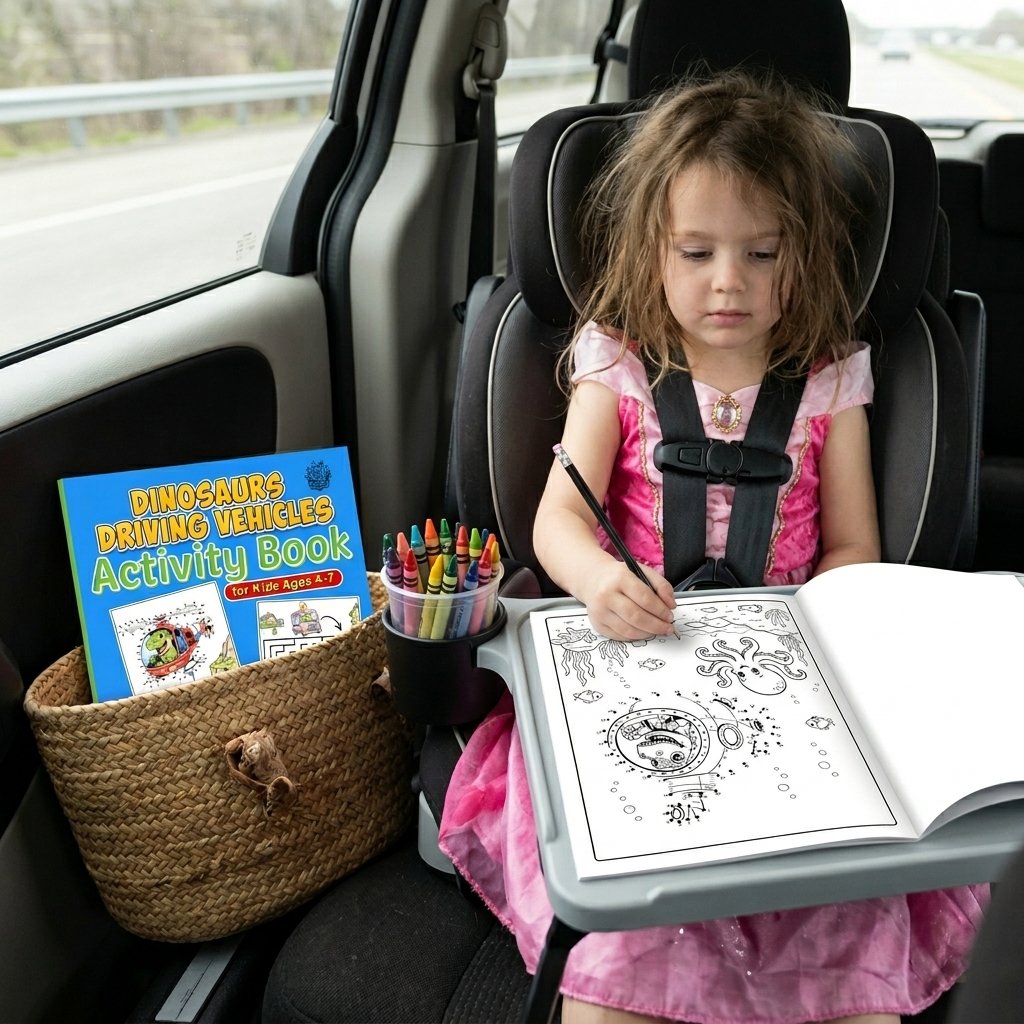
The goal is flexibility. Screens can be one tool. Coloring can be another.
The takeaway
Screen-free time works better when it has a plan.
Not a rigid plan.
Not a color-coded family media doctrine with laminated rules, matching bins, and a parent pretending this will all go exactly as written.
Cute thought.
Just a simple replacement that is visible before the screen request becomes a full courtroom debate with opening statements and emotional damages.
Coloring and activity books can be that replacement because they’re concrete.
A child can hold the book. Pick a page. Choose a crayon. Do the thing.
That matters more than we think.
Especially when the alternative is a tiny person chanting “tablet” like they’re summoning it from the underworld.
The real-life problem
A lot of screen-time battles start because the screen has a job and nothing else does.
The screen fills the wait.
The screen quiets the room.
The screen helps the adult cook dinner.
The screen buys time during a phone call.
The screen makes the car ride survivable.
So when we say “no screen” without offering another job, we’re removing a tool without replacing its function.
No wonder everyone gets cranky.
Including us, obviously. We are not floating above this situation in enlightened calm. We are also tired and trying to make noodles.
Start with one screen-free zone
Do not overhaul your whole family life at 4:30 p.m. on a Wednesday.
That is how people end up crying near the dishwasher.
Choose one zone or moment:
The kitchen table before dinner.
The car on short errands.
The last twenty minutes before bed.
Restaurant waiting.
The first ten minutes after school.
Then put coloring or activity books there.
The physical location matters.
If the book is visible, the child is more likely to use it.
If it is buried in a closet, congratulations, you own a theoretical solution.
Very tidy.
Very useless.
Use “instead” language
Kids do better when they hear what to do, not only what not to do.
Instead of:
“No tablet.”
Try:
“This is coloring time. Tablet can happen later.”
Instead of:
“Stop asking for my phone.”
Try:
“You can pick a maze or coloring page while we wait.”
Instead of:
“We are cutting screen time.”
Try:
“We are making after-dinner quieter for our brains.”
This is not about tricking children.
It is about giving their brains a path.
And frankly, giving our tired adult brains a script so we don’t end up improvising a parenting manifesto while someone is crying near the fridge.
Expect resistance
If your child is used to screens in a certain moment, they may not cheerfully embrace the analog basket like a tiny lifestyle influencer.
They may complain.
They may say coloring is boring.
They may suddenly remember every injustice they have ever suffered, dating back to the blue cup incident of last Tuesday.
Stay calm.
Keep the expectation small.
One page.
Five minutes.
Then move on.
We are building a habit, not winning a dramatic showdown in the kitchen.
No trophy will be awarded.
What this helps with
Coloring books can help families create screen-free routines because they are easy to repeat.
They give the child something to do with their attention and hands.
They are also emotionally low-stakes.
There is no score, no losing, no notifications, no “just one more level,” no autoplay trying to raise your child one bizarre video at a time.
That quietness is part of the value.
A deeply underrated part, honestly.
What this does NOT mean
This is not about being smugly screen-free.
Screens are not evil.
Parents are not failing because their children watch shows.
Family life is long, complicated, and occasionally requires an animated animal to buy everyone twenty minutes.
Bless that animated animal. May its theme song eventually leave our brains.
The goal is flexibility.
Screens can be one tool.
Coloring can be another.
Outside play can be another.
Books, blocks, snacks, baths, boredom—all tools.
The more tools we have, the less any one tool has to carry the whole family.
Which is good, because the tablet was starting to look tired.
And possibly a little powerful.
The tiny reset to try today
Pick one moment that usually becomes screen time by default.
Put a coloring book there before the moment starts.
When your child asks for the screen, say:
“First one page. Then we’ll decide.”
Keep your voice boring.
Boring is powerful.
Boring says, “I am not available for litigation.”
Will it work every time?
No.
Obviously not. Children have free will, unfortunately.
Will it start giving your family another gear?
Yes, with repetition.
And another gear is the whole point.